Pitching development
Anatomy
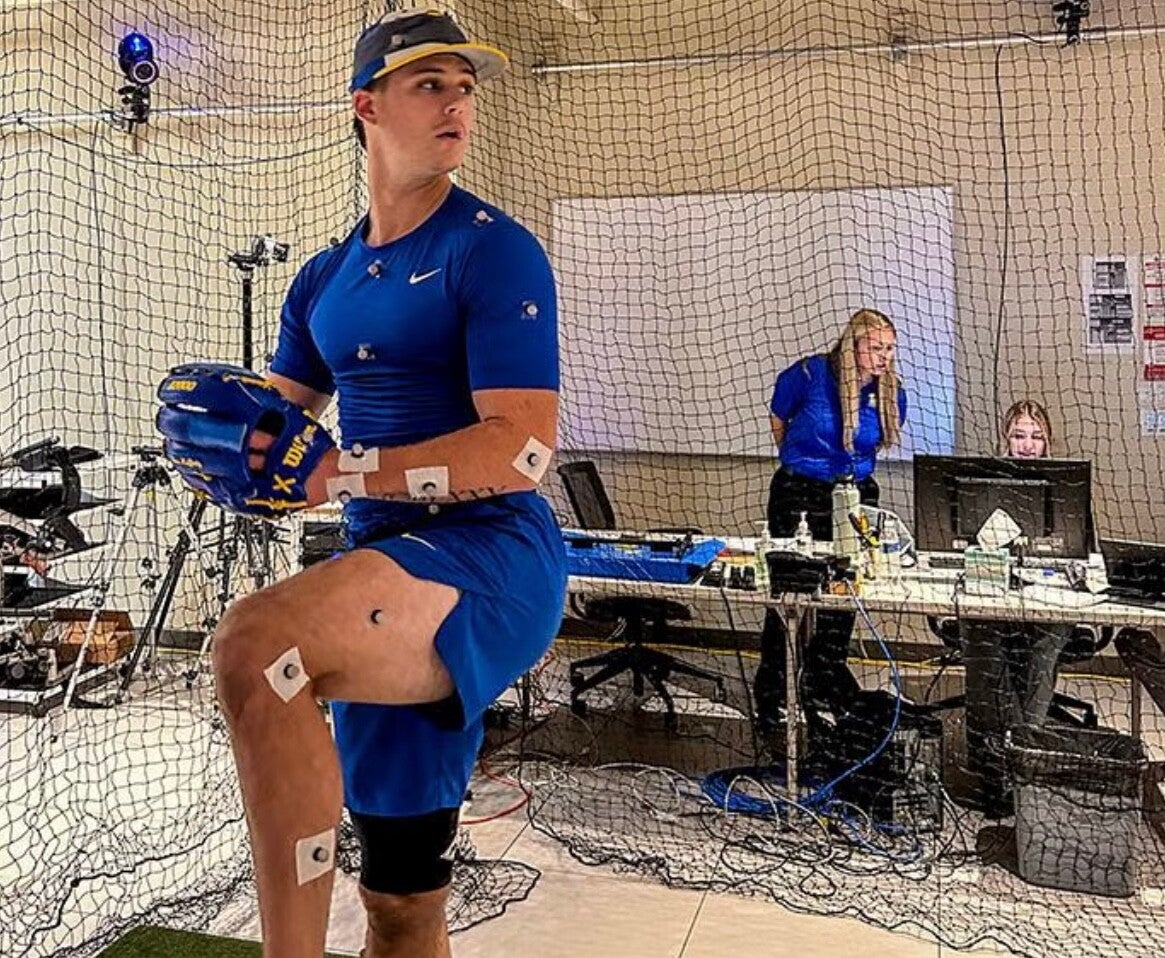
Every pitcher's delivery starts with their physical profile. Height, limb length, strength, mobility, range of motion, and stage of physical development all shape how a pitcher generates and organizes movement. There's no single ideal body type or mechanical model for pitching, so understanding an athlete's individual physical characteristics gives essential context for how they move, perform, and develop.
What we evaluate:
- Strength and force production — how the athlete generates and applies force
- Mobility and range of motion — available movement through key areas of the body
- Body structure — how height, limb length, and proportions influence movement
- Physical development — how strength, mobility, and athleticism evolve over time
Tools used: force plates, movement and mobility assessments, motion capture systems, high speed video, and physical performance testing.

Mechanics
Pitching is a high speed sequence of coordinated movement, transferring force and energy through the entire body. How a pitcher moves provides context for velocity, command, pitch characteristics, repeatability, and areas for development.
What we evaluate:
- Lower half movement — how the pitcher uses the ground and lower half to create force and move down the mound
- Sequencing — how the lower half, hips, trunk, and arm work together to transfer energy through the delivery
- Timing and coordination — how consistently the different parts of the body work together throughout the delivery
- Arm action — how the throwing arm works within the overall delivery and how it affects the timing of the pitch
- Release consistency — how consistently the pitcher gets to and repeats their release position
Tools used: KinaTrax and motion capture for 3D biomechanical data and movement sequencing, force plate mounds to directly measure ground reaction forces at the point of contact on the rubber and landing leg, TrackMan for velocity and release characteristics, Rapsodo for spin and movement, and Edgertronic high speed video for arm action and release. High performance pitching environments commonly combine motion capture, force plate mounds, high speed cameras, and ball tracking technology to connect what the pitcher is doing physically with what the baseball is doing after release. The goal isn't to make every pitcher move the same way. It's to understand the individual pitcher, how they organize their delivery, and how those movement patterns influence performance.
Pitch Design
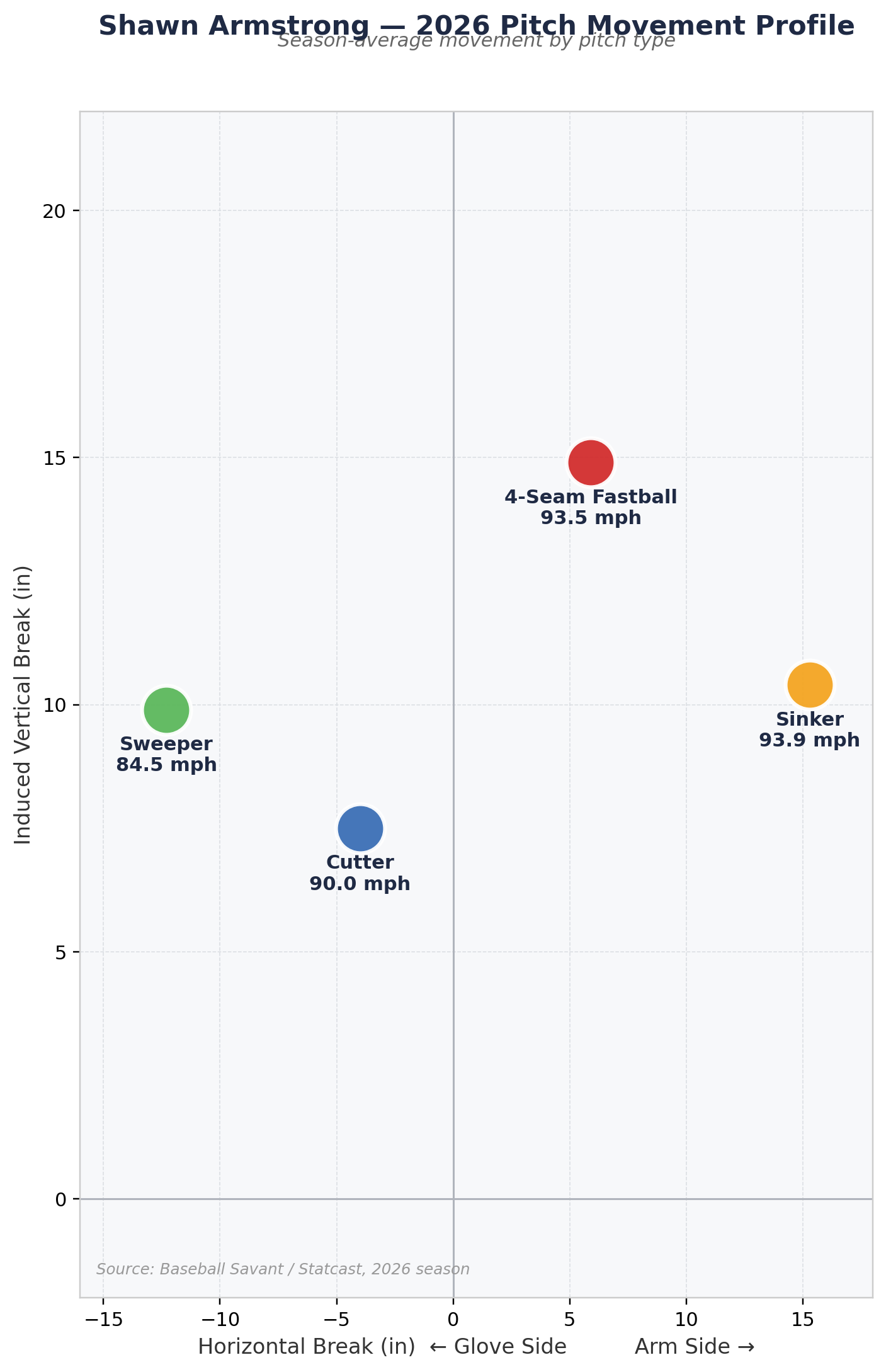
Pitch design is the process of understanding how a pitcher creates and shapes each pitch. Velocity, movement, spin, release, and pitch shape can all help determine how a pitch performs.
What we evaluate:
- Velocity — how hard the pitch is thrown
- Movement — horizontal and vertical movement
- Spin — spin rate, spin axis, and spin efficiency
- Release — release height, side, extension, and consistency
- Pitch shape — how the pitch moves and how it separates from the pitcher's other pitches
Tools used: TrackMan for velocity, movement, spin, release characteristics, and ball flight; Rapsodo for pitch movement, spin, and pitch characteristics; Edgertronic high speed video to evaluate grip and release. TrackMan has become an important part of baseball scouting and recruiting, providing an objective way to compare pitchers and identify traits that may translate to higher levels of play. Pitch design is about understanding what the pitcher creates and why it works. Technology provides the data, while scouting and coaching help put that information into context.